
Gun Rights
How Many Felons in America Cannot Possess or Buy a Gun?
People often ask: How many felons in America cannot possess a gun or buy a gun? The number is much larger than the population currently sitting in prison, jail, or under supervision. Millions of Americans finished their sentences years—or even decades—ago and still live with felony records that can continue to affect firearm possession and purchase.
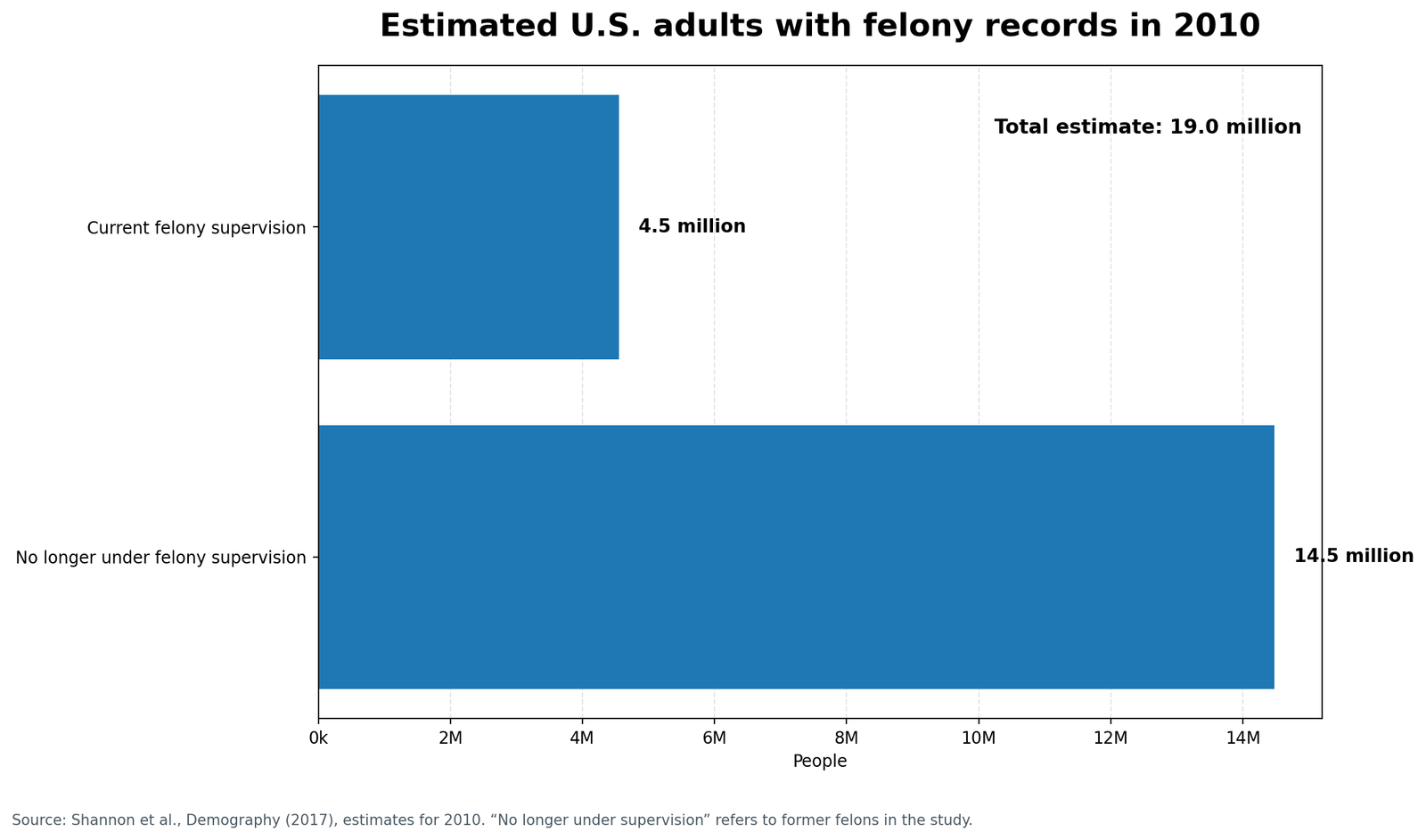
Quick answerThere is no single live federal registry that counts every person in America who has a felony record and remains prohibited from possessing or receiving a firearm. One of the best-known national estimates found that about 19.0 million U.S. adults had a current or past felony conviction in 2010. Of those, roughly 14.5 million were former felons no longer under current felony supervision, while about 4.5 million were then under felony supervision. In other words, most people living with felony records were already back in the community.
That 19 million figure comes from a peer-reviewed Demography study by Sarah Shannon, Christopher Uggen and coauthors. The researchers estimated that people with felony convictions represented about 8.1% of the U.S. adult population in 2010. Because the United States does not maintain a national registry of everyone who has ever received a felony conviction, there is no equally comprehensive official 2026 head count. The 2010 estimate should therefore be understood as a strong historical benchmark—not a claim that exactly 19 million people are prohibited today.
Most felons are not in prison
This is the part that gets lost when people rely only on current prison or probation statistics. A person can finish prison, finish parole, complete probation, go back to work, raise a family, and live crime-free for decades while the underlying conviction still remains on the record.
The Shannon-Uggen study estimated that in 2010 approximately 76% of adults with felony records were former felons rather than people under current felony supervision. That means a discussion of firearm disabilities cannot stop with the number of people presently incarcerated.
19.0MEstimated adults with felony records in 2010
Current and former felons combined.
14.5MFormer felons
People estimated to be no longer under current felony supervision.
8.1%Share of U.S. adults
Estimated to have a felony conviction as of 2010.
The population with felony records grew dramatically
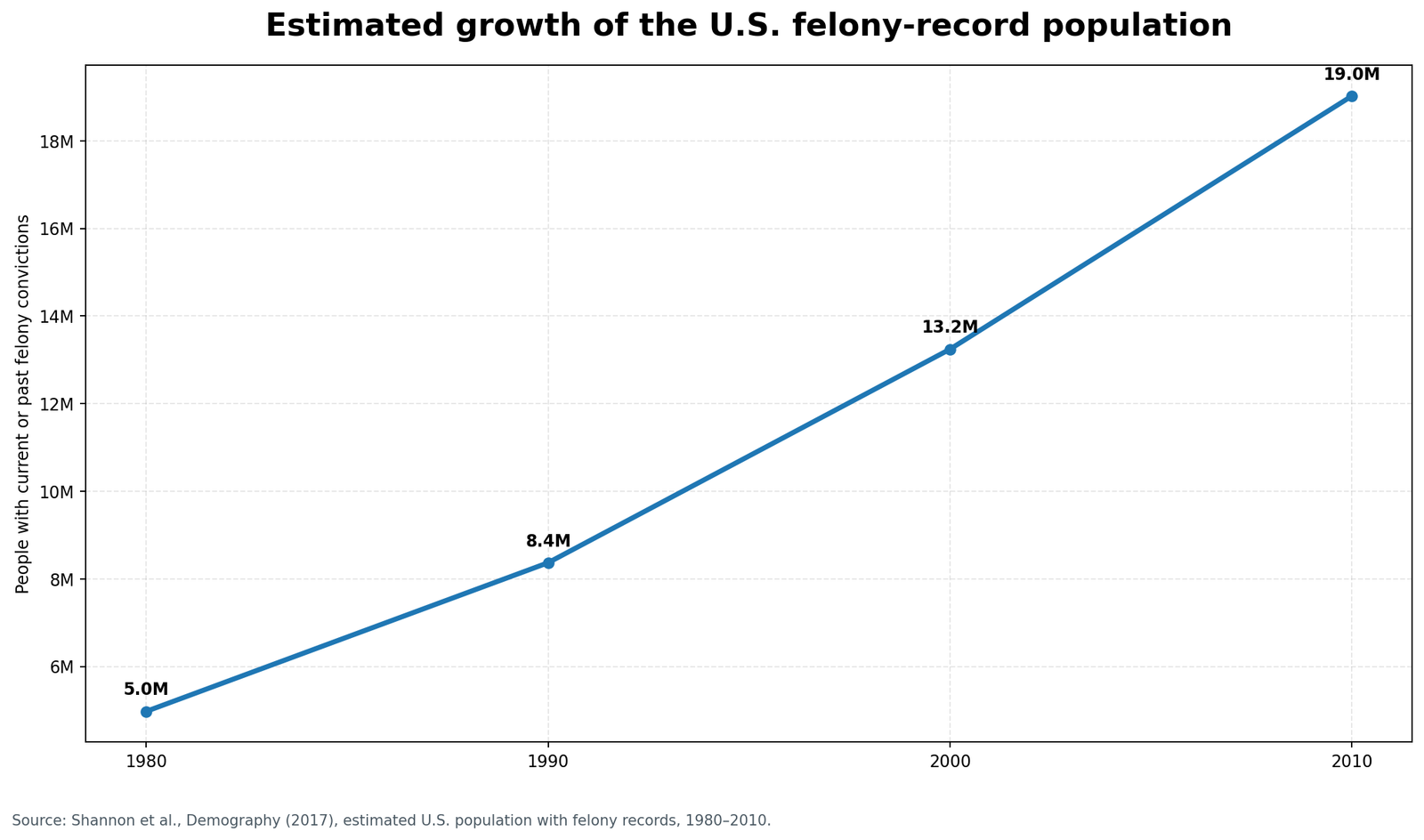
The same research estimated fewer than 5 million U.S. adults with felony records in 1980, about 8.4 million in 1990, 13.2 million in 2000, and 19.0 million by 2010. That accumulation matters because a felony record does not disappear merely because a sentence has been completed.
A 30-year-old drug conviction can still matter today
Consider a person convicted of a felony drug offense in 1996. Assume the person served the sentence, finished parole or probation around 1999 or 2000, paid every criminal fine, and has not been arrested again for more than 25 years.
That person is clearly not part of today’s prison or parole population. But the age of the conviction by itself does not automatically erase a federal firearm disability. If the conviction still qualifies under 18 U.S.C. § 922(g)(1), and no pardon, qualifying set-aside, restoration of civil rights, or other legally effective relief has changed how federal law treats the conviction, the firearm prohibition can still matter decades later.
The fact that the drug case is 30 years old may be very important when evaluating rehabilitation, current public-safety risk, applicable waiting periods, and the strength of a restoration application. But time alone is not the same thing as restoration.
This is exactly why someone with a 1990s drug conviction should not assume either “I am still prohibited forever” or “it was so long ago that it no longer counts.” The right answer depends on the offense, the conviction jurisdiction, the sentence, later history, any state restoration that occurred, current residence, and the interaction between state law and federal law. Start with the Eligibility Review and the relevant offense guide.
Recent correctional statistics are useful—but they measure something different
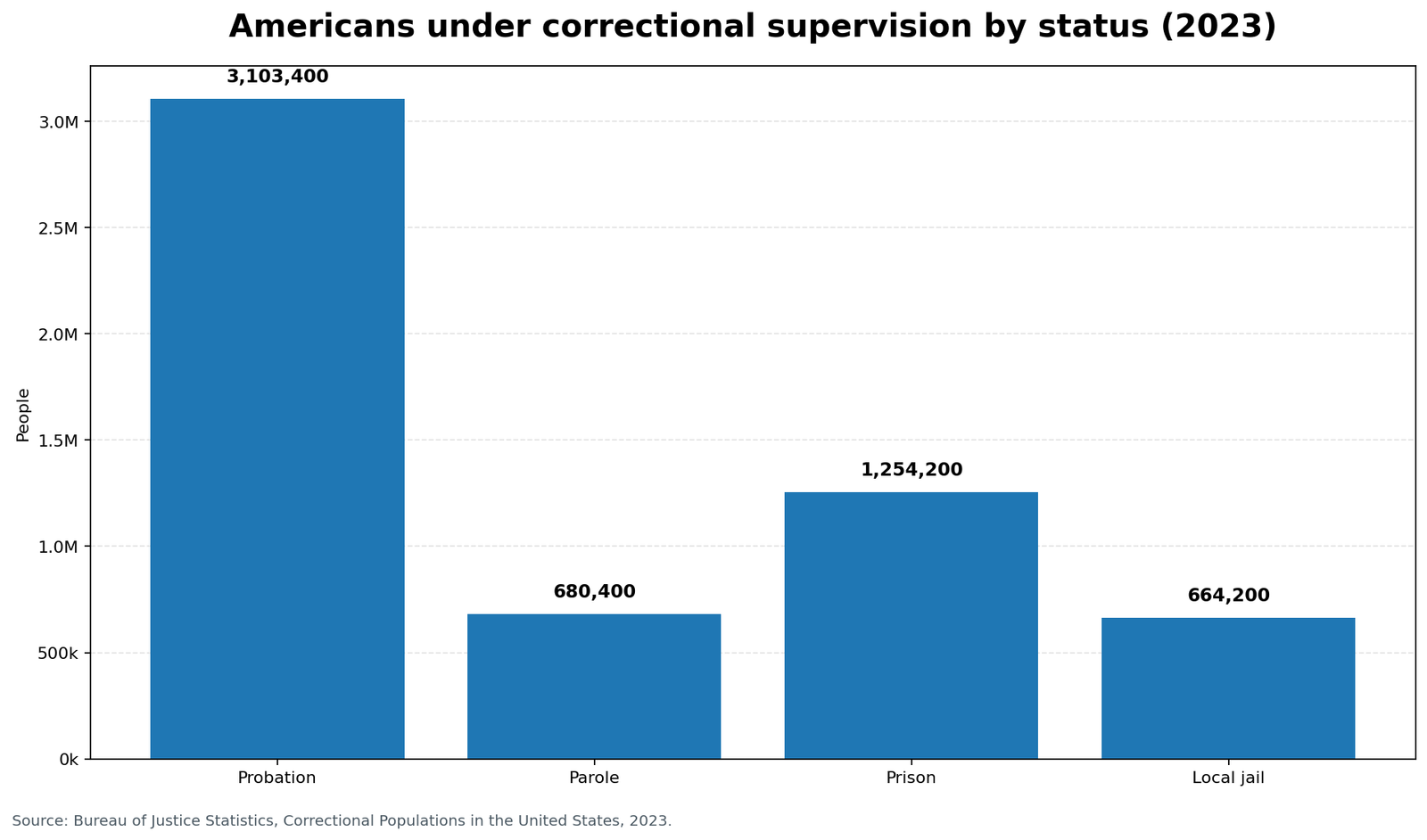
The Bureau of Justice Statistics reported about 5.53 million people under some form of correctional supervision at year-end 2023, including probation, parole, prison, and local jail. That is useful for understanding the current size of the correctional system, but it should not be confused with the much larger population of people who have a felony record from the past.
It also is not a pure “felon count.” Current probation and jail populations can include people supervised or detained for misdemeanors as well as felonies. That is another reason not to use the 5.53 million correctional-supervision number as a substitute for the total number of Americans living with felony convictions.
What crimes appear most often among sentenced state prisoners?
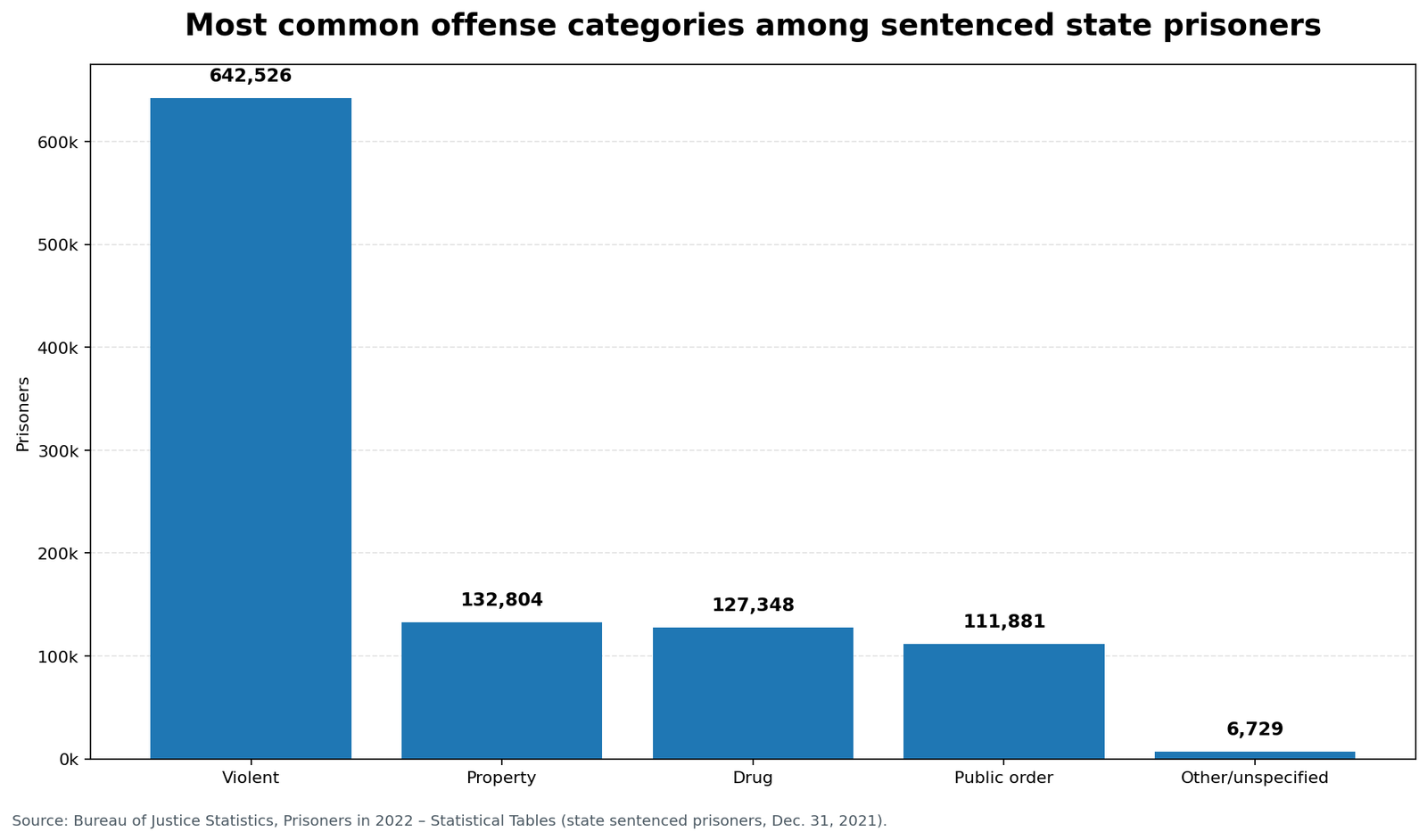
There is no single national database breaking down the offense of every living former felon. But BJS data for sentenced state prisoners gives a useful picture of the serious offense categories that appear frequently in the state prison population.
Violent offenses make up the largest group, followed by property, drug, and public-order offenses. Individual offenses within those categories include murder, sexual assault, robbery, assault, burglary, theft, fraud, drug offenses, weapons offenses, and others.
The distinction matters for gun-rights restoration. A person with an old nonviolent fraud or tax conviction may present very differently from someone with robbery, domestic violence, stalking, a serious sex offense, firearm trafficking, or a violent weapons offense. Felon Justice now has 250 conviction-specific guides to help identify the issues tied to the actual offense appearing on the judgment.
Which states have the most felons?
There is no current official 50-state census of every living person with a past felony conviction. The best-known academic work produced state-level estimates through 2010, while modern BJS tables provide more current counts of people in prison, jail, probation, and parole.
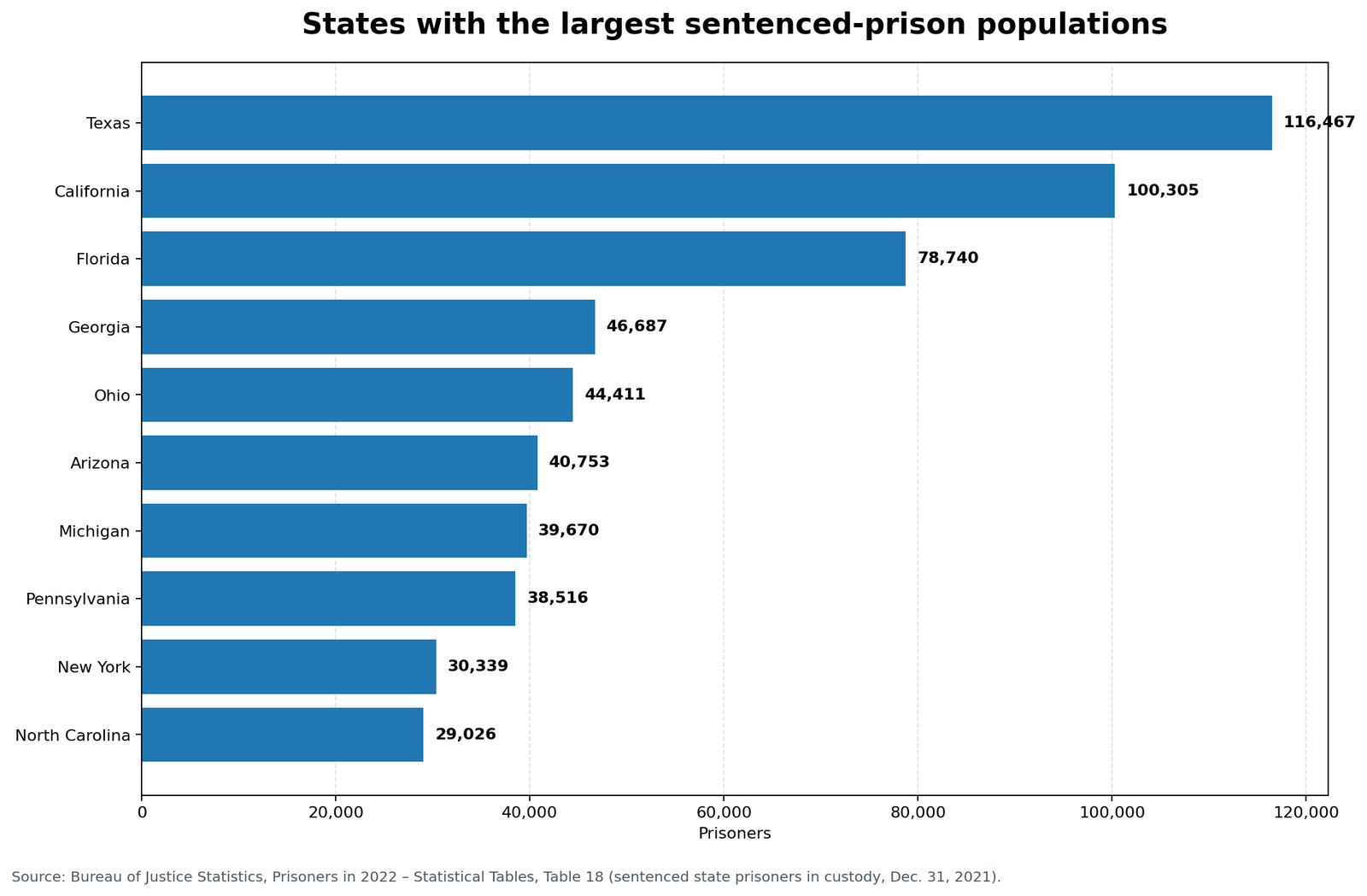
As a current-system proxy, Texas, California, Florida, Georgia, and Ohio were among the states with the largest sentenced state-prison populations in the BJS data shown below. But this chart should not be read as a complete ranking of every current and former felon living in each state. People move, complete sentences, die, obtain relief, and remain in the community for decades after supervision ends.
Does every person with a felony record remain prohibited from having a gun?
No. A felony-record estimate and a firearm-prohibition estimate are not identical.
Federal law generally prohibits firearm possession by a person convicted of a crime punishable by more than one year, but 18 U.S.C. § 921(a)(20) contains rules affecting how certain convictions, pardons, set-asides, and restorations of civil rights are treated. State law can also restore rights in some circumstances or impose separate restrictions. In addition, DOJ’s renewed federal relief process under 18 U.S.C. § 925(c) creates another possible route for some federally prohibited applicants.
So the 19 million felony-record estimate should not be read as “19 million people definitely prohibited from guns today.” It tells us the scale of the population that has lived with felony convictions. Determining how many remain legally prohibited requires a case-by-case legal analysis that no national database presently supplies.
How Felon Justice may be able to help
Felon Justice is designed for both the recently released person and the person whose case is decades old. Depending on the record, that can mean helping identify:
- whether the conviction still creates a federal firearm disability;
- whether a separate state-law prohibition still applies;
- whether an old pardon, expungement, set-aside, or civil-rights restoration changed the federal analysis;
- whether a conviction from 10, 20, or 30 years ago may now present a stronger rehabilitation record;
- the actual sentence-completion date, including supervision and criminal monetary obligations;
- whether the renewed federal § 925(c) application process may be relevant;
- which of the 250 offense-specific guides and state restoration guides apply to the record.
If your conviction is decades old, do not rely on age alone. Use the Eligibility Review to start with the actual judgment, state or federal jurisdiction, sentence history, later record, and the result you want to accomplish.
Bottom line
The number of Americans affected by felony records is far larger than the number currently in prison. The best-known national research estimated about 19 million U.S. adults with current or past felony convictions as of 2010, and roughly 14.5 million of them were already former felons no longer under current felony supervision. There is no comparable official national 2026 census, so the exact present-day number is unknown.
For gun rights, the key point is that leaving custody does not automatically end the legal consequences of a felony conviction. A person who finished a drug sentence 30 years ago can still need a serious federal and state restoration analysis today.
Frequently asked questions
A peer-reviewed national estimate found about 19.0 million U.S. adults had current or past felony convictions in 2010. About 14.5 million were former felons no longer under current felony supervision. There is no equally comprehensive official 2026 count.
No. The felony-record population and the currently prohibited population are not identical. Pardons, qualifying restorations of civil rights, set-asides, state law, federal law, and other forms of relief can change the result.
Yes, potentially. The age of a qualifying felony conviction does not by itself erase a federal firearm disability. A 1990s drug conviction can still matter unless legally effective relief has changed the status of the conviction or restored the relevant rights.
No. Completing the sentence can be important for restoration eligibility, but sentence completion by itself does not automatically remove every federal or state firearm prohibition.
BJS data shows violent offenses are the largest category among sentenced state prisoners, followed by property, drug, and public-order offenses. That prison snapshot is not the same as the offense mix of every living former felon.
Gather the judgment, charging document, sentence-completion proof, any pardon or restoration order, and your current state of residence. Then use the Eligibility Review to identify whether the problem is federal, state, or both.
General information only. This article is not legal advice and is not permission to possess, receive, transport or purchase a firearm. Verify the current law and the legal effect of your actual court orders.


Case review
Want the next question answered for your record?
Send the conviction, jurisdiction, sentence-completion date and goal.


